How Do You Know What Colors Go Well Together for Eyeshadow

Take you e'er wondered why your bruises change colour, or if those colors signify something? Bruises, too known equally hematomas, become their signature dark purple-blue color from the presence of blood under the peel. Injury to the site where the bruise forms causes scarlet blood cells to intermission downwardly, and with each new phase of breakdown comes a slightly different trample color.
Though the red blood cells undergo breakdown, the area itself under the site of injury is going through a process of healing. When you meet your trample kickoff to modify colors, rest assured that your body is performing the advisable processes to heal your wound.
A bruise develops at the site of an injury on the skin, typically when some sort of trauma causes bleeding nether the surface of the skin without really breaking the surface. With minor injuries, such equally bumping your arm or pinching your finger, the haemorrhage is usually confined to your skin. The trample will likely appear within minutes to hours.
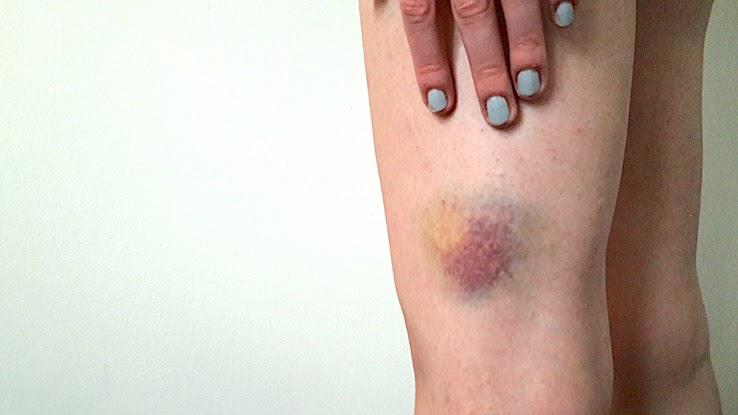
With more forceful trauma, such as twisting your ankle, running into the corner of a table or getting hit with a baseball, haemorrhage typically occurs in the deeper tissues of your body. The blood and so gradually seeps into your peel over a period of hours to days. This is why y'all might non see a bruise for a day or two subsequently you've had a fall or other injury.
The size of a trample depends on what acquired your injury and the amount of force involved in creating it. The more forceful the injury is, the greater the amount of bleeding and the larger your bruise will be. The closer to your peel's surface the bruise is, the more intense the colors of the bruise volition likely be, besides.
What Are the Early Colors of Bruises?
Fresh bruises tin develop anywhere from minutes to days after an injury, depending on how deep below your peel's surface the bleeding is. Typically, a new trample progresses from red to blue to purple within the first few days afterwards an injury.
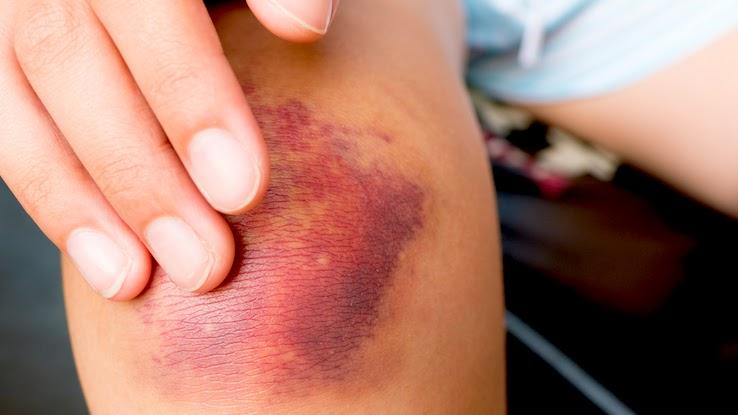
Scarlet Bruises: When you first become a bruise — particularly i near the surface of your skin — it unremarkably appears red. The color comes from fresh claret leaking into your tissues. Fresh claret is brilliant ruby-red because it contains a protein called hemoglobin, which carries oxygen from your lungs to other parts of your body.
Blueish Bruises: Within a few hours, blood that has leaked from your injured blood vessels loses the oxygen it was carrying. As this occurs, the blood becomes darker and the trample begins to await more bluish or purple.
Purple Bruises: Typically, over one to three days (depending on the severity of your injury), a trample becomes more intensely purple and may even appear black. This occurs equally red blood cells break down and iron is released into the injured area.
Note that, if y'all accept a deep bruise, the crimson stage may have already passed by the fourth dimension you're first able to meet the bruise. In this case, the first color you encounter may be blue or purple.
Do Bruises Change Color as They Heal?
As mentioned, when red blood cells break down, they release an iron-rich protein chosen hemoglobin. While your trample begins to heal, your body converts the hemoglobin into other pigmented proteins. The presence of these proteins causes your trample to modify color as it heals.
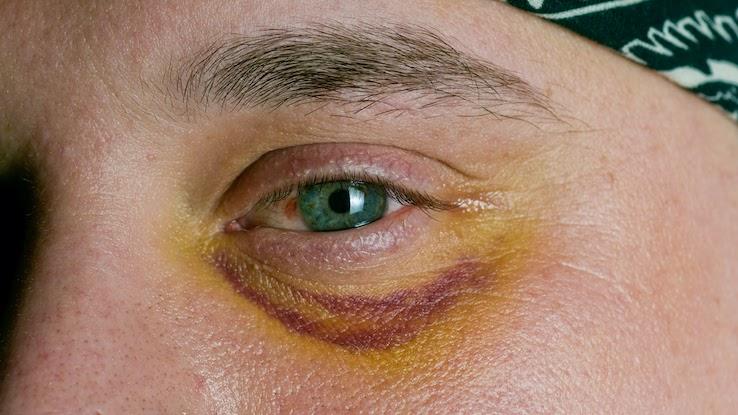
Light-green Bruises: A dark-green bruise indicates that the site of injury has entered its last stages of healing. The bruise may transition from majestic to dark-green at the edges or eye of the injury site. The green colour is due to the presence of a hemoglobin breakdown product called biliverdin. The terminal part of the word, "verdin," comes from the Latin word for "dark-green."
Yellow Bruises: The final step of healing involves the bruise turning a yellowish colour. This is from the final breakup product of hemoglobin appearing in your skin; it's known every bit bilirubin. Every bit your body clears the remaining cellular and other debris from the bruised area, the xanthous pigment fades and your skin returns to its original tone.
Y'all may accept noticed that many bruises tend to be multicolored. This is because the amounts of blood in unlike areas of the bruise vary, so the stages of healing overlap.
How Should You Care for a Trample?
In that location are a few things you can do to limit the extent of a bruise and help it heal quickly. The virtually commonly suggested technique involves a process known as RICE, which stands for "rest, ice, shrink and drag":
- Residual. Once you observe your injury, try to rest the afflicted surface area. For instance, if you've sustained a blow to your elbow, try not to use that arm when possible.
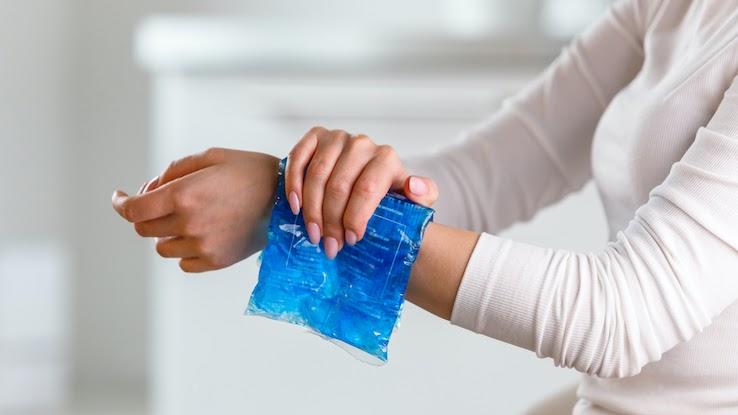
- Ice. Wrap an ice pack or a bag of frozen vegetables in a clean towel prior to applying it to the affected surface area to minimize skin irritation. Do non leave the water ice pack on for longer than twenty minutes at a time. You can echo your icing sessions throughout the day to help forestall swelling.
- Shrink. Compression of the area can help reduce swelling and limit the amount of bleeding under your skin. This tin can lessen the severity of your developing trample. Pinch involves applying slight pressure without cutting off circulation or blood flow.
- Elevate. If possible, go along the injured area above the level of your centre to minimize swelling.
Y'all should see a healthcare professional if any of the following utilise to yous:
- You seem to find bruises all over your body and cannot account for injuries that would've caused them.
- You've sustained trauma to your face (particularly in the case of a blackness centre).
- Your bruise continues to get larger or stays painful even subsequently post-obit the RICE method for three days.
- You take a family history of bleeding or clotting disorders.
- You lot cannot functionally use the expanse affected by the bruise, such as not existence able to walk on a bruised ankle.
Though bruises can exist painful, they're signs of healing and indicate your body is working hard to mend your injury. The side by side time you get a bruise, you lot'll know how to interpret the changing colors of your injury and can tell exactly where you are in the healing process.
Resource Links:
https://medlineplus.gov/bruises.html
https://medlineplus.gov/ency/presentations/100207_1.htm
https://world wide web.mayoclinic.org/first-assist/first-aid-trample/nuts/art-20056663
Source: https://www.symptomfind.com/health/why-bruises-change-colors?utm_content=params%3Ao%3D740013%26ad%3DdirN%26qo%3DserpIndex

Post a Comment for "How Do You Know What Colors Go Well Together for Eyeshadow"